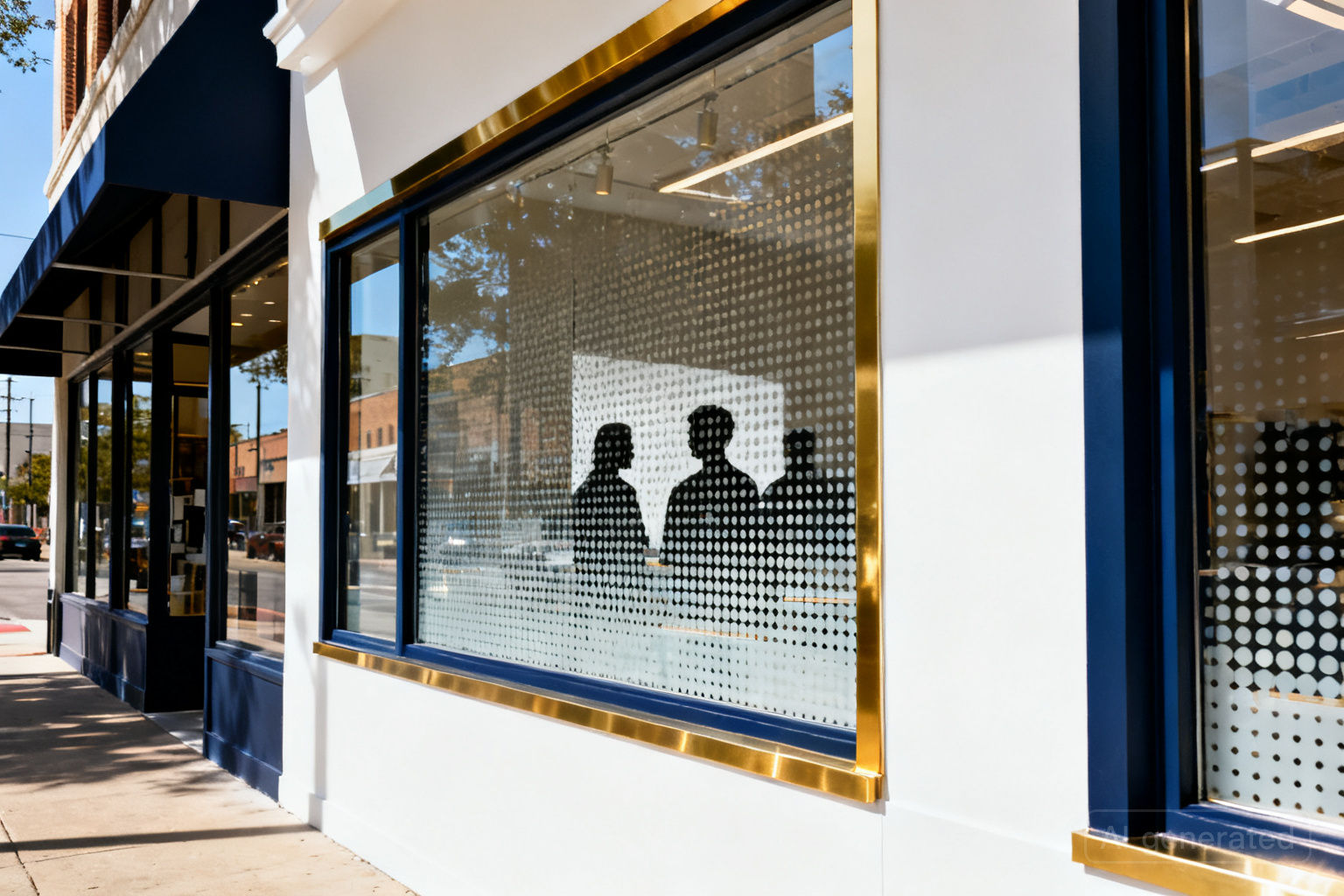
Perforated one-way window film is a smart, cost-effective way to add privacy to your storefront, office, or vehicle while keeping your brand visible from the inside. The tiny perforations—invisible to the naked eye from a distance—let you see out clearly while preventing people outside from seeing in.
For Houston businesses managing foot traffic, client confidentiality, or heat control, this film solves multiple problems at once. Whether you're protecting a conference room, creating a branded storefront, or reducing glare in a busy retail space, perforated film offers flexibility without the permanence of paint or the opacity of full blockout solutions.
This guide covers what the film is, how it works, where to install it, how to care for it, and how it compares to other window solutions so you can decide if it's right for your business.
Key Takeaways
- Perforated one-way film lets you see out while blocking the view in—ideal for privacy and branding combined
- The film works by using thousands of tiny holes that bend light, creating a one-way mirror effect without chemicals or coatings
- Installation requires a clean surface, precision measuring, and careful application to avoid bubbles and wrinkles
- It works on interior or exterior windows, glass doors, vehicle windows, and even glass partitions inside offices
- Maintenance is simple: gentle cleaning with soap and water, no harsh chemicals or abrasive tools
- Compare it to blockout banners for full opacity or window clings for removability—each has different strengths
What Is Perforated One-Way Window Film and How Does It Work?
Perforated one-way window film is a thin, transparent adhesive film embedded with thousands of micro-perforations (tiny holes) spaced at precise intervals. When light hits the film from the bright side (outside), the perforations scatter and bend the light, creating a mirror-like effect that prevents people outside from seeing clearly inside. From the inside, where light is lower, you look through the holes and see the outside world with minimal distortion.
The film doesn't use tinting, reflective coatings, or chemicals—just geometry. The ratio of hole size to spacing determines how much light passes through and how opaque it appears from each side. A higher perforation density (more holes per square inch) means better privacy but slightly less outward visibility; a lower density offers clearer views out but less privacy.
This makes it ideal for retail storefronts (you can display products or branding while keeping the interior private), office windows (employees can see outside without being watched), and vehicle windows (driver visibility without passenger exposure). It's also effective at reducing heat and glare, since the perforations scatter incoming light rather than absorbing it.
Perforated film works best on windows that get direct sunlight. On shaded or north-facing windows, the privacy effect weakens because there's less light contrast between inside and outside.
When Should You Use Perforated One-Way Window Film vs. Other Window Solutions?
Perforated film shines when you need both privacy and visibility—or when you want to maintain a clear, professional look while controlling what people see. It's faster and less invasive than frosting, tinting, or installing privacy glass, and it's removable without damage (when installed correctly).
If you need complete opacity with zero visibility through the window, blockout banners are a better choice—they're opaque, double-sided, and ideal for events or temporary coverage. If you want something customers can peel off and reposition without residue, window clings offer that flexibility, though they don't provide the same level of one-way privacy.
For vehicle windows, perforated film is popular because it doesn't obstruct the driver's view while adding privacy and a professional look. For office conference rooms, it's an elegant alternative to closed blinds. For retail storefronts in the Houston heat, the light-scattering effect also helps reduce cooling costs.
Perforated film is semi-permanent (lasts 5–7 years or longer) and can be removed, whereas window clings are meant to be temporary. Choose based on how long you plan to use the solution.
Where Can Houston Businesses Install Perforated One-Way Window Film?
You can apply perforated film to almost any smooth glass or acrylic surface. Common applications include storefront windows (retail shops, restaurants, salons), office windows and glass doors, conference room partitions, vehicle windows (cars, trucks, vans, fleet vehicles), and interior glass walls in modern office spaces.
In the Houston area, businesses often use it on south and west-facing windows to reduce afternoon heat and glare while maintaining privacy. It's also popular in medical and legal offices where confidentiality matters, and in retail spaces where you want to display merchandise while keeping the back office or employee area private.
The film adheres best to clean, smooth glass. Textured glass, frosted windows, or heavily weathered surfaces may not hold the film as effectively. If you're unsure whether your windows are suitable, a quick consultation with a professional installer can confirm.
Apply perforated film to the interior side of the window for longer durability in harsh Texas weather; exterior application works too but requires UV-resistant film and more frequent maintenance.
How Do You Install Perforated One-Way Window Film Correctly?
Proper installation is crucial to avoid bubbles, wrinkles, and poor adhesion. Start by thoroughly cleaning the window with a squeegee and glass cleaner to remove dust, fingerprints, and residue. Measure the window carefully and cut the film slightly larger than needed (you'll trim the excess after application).
Spray the window with a light soap-and-water solution (this lets the film slide into position before it sets). Peel back a corner of the backing and apply the film slowly, using a squeegee to push out air bubbles as you go. Work from the center outward in a fan pattern, applying firm, even pressure. Once the film is in place, trim the edges with a sharp utility knife and squeegee the perimeter to seal it.
The entire process takes time and patience—rushing leads to trapped air and visible defects. For large windows or complex shapes, professional installation is worth the investment. Many Houston print shops and sign companies, including 53Printers, can handle the installation to ensure a clean, professional finish.
- Clean the window thoroughly with glass cleaner and a squeegee
- Measure and cut the film with a 1-2 inch margin on all sides
- Spray the window with soapy water to allow repositioning
- Peel back the backing and apply the film corner by corner
- Use a squeegee to push out bubbles, working from center outward
- Trim excess film with a sharp utility knife once fully adhered
- Allow 24–48 hours before cleaning or adjusting
Avoid using heat guns or hair dryers during application—perforated film doesn't need heat to set, and excess heat can warp the adhesive or cause the film to shrink.
What Are the Maintenance and Care Requirements?
Perforated film requires minimal upkeep. Clean it gently with a soft cloth and mild soap-and-water solution—the same way you'd clean regular windows. Avoid abrasive scrubbers, vinegar-based cleaners, or high-pressure washers, which can damage the adhesive or lift the film edges.
Check the edges periodically, especially on exterior windows exposed to heavy sun or weather. If an edge begins to lift, you can carefully re-adhere it with a small amount of adhesive or contact a professional to reseal it. Over time (5–7 years or more), the film may fade slightly or the adhesive may weaken, at which point you can remove it and apply new film.
Removal is straightforward: carefully peel a corner and pull the film away slowly at a 45-degree angle. Any residual adhesive can be removed with rubbing alcohol and gentle rubbing. The glass underneath should be undamaged.
In the Houston heat, check south-facing windows annually for edge lift or adhesive degradation—UV exposure and temperature swings can accelerate wear.
How Does Perforated One-Way Film Compare to Blockout Banners and Window Clings?
Each solution has different strengths. Blockout banners are fully opaque, double-sided, and ideal when you want zero visibility through the window. They're perfect for temporary events, complete privacy, or bold branded messaging that covers the entire window. They don't let light through at all.
Window clings are reusable, removable stickers with no residue—great for seasonal promotions, temporary branding, or businesses that change their window displays frequently. However, they don't provide one-way privacy; they're more about decoration and messaging.
Perforated film splits the difference: it offers privacy and light control while still allowing visibility from inside, and it lasts much longer than clings. If you need a professional, semi-permanent solution that balances privacy with visibility and aesthetics, perforated film is the better choice. If you need full opacity or maximum flexibility, consider blockout banners or clings instead.
You can combine solutions—use perforated film on office windows for privacy and pair it with vinyl banners or clings on storefronts for bold branding.
Can You Customize Perforated One-Way Film with Your Logo or Branding?
Yes. You can apply custom vinyl graphics, logos, or text directly onto perforated film before installation, or print designs onto the film itself during manufacturing. This is where perforated film becomes a powerful branding tool—your storefront can maintain privacy while displaying your company name, hours, or promotional messaging.
For custom designs, work with a professional designer and printer who can ensure your graphics are sized correctly, color-accurate, and positioned to maximize impact. 53Printers' graphic and brand design services can help you create a cohesive look that ties your window film to your broader brand identity—logos, color schemes, fonts, and all.
Common applications include retail storefronts with company logos, office windows with department names or confidentiality notices, and vehicle wraps with business branding. The combination of privacy and branded visibility is especially powerful for small businesses in the Houston area looking to stand out without sacrificing professionalism.
Design your graphics with high contrast (dark text on light film or vice versa) so they're readable from both inside and outside, even though the privacy effect limits how clearly people can see through.
FAQ: Common Questions About Perforated One-Way Window Film
Frequently Asked Questions
Does perforated one-way window film really work both ways, or is it just one-way?+
It's truly one-way under normal conditions. From the bright side (outside in daylight), the perforations scatter light and create a mirror effect, preventing clear visibility inside. From the dim side (inside), you see through the holes clearly. At night, if the interior is brightly lit and the exterior is dark, the effect reverses—people outside can see in. For true 24/7 privacy, pair the film with blinds or use a higher-perforation-density film.
Will perforated film reduce heat and glare in my Houston office or storefront?+
Yes, significantly. The perforations scatter incoming light rather than absorbing it, which reduces glare and heat gain compared to clear glass. You won't see the dramatic cooling effect of reflective tint, but you will notice less eye strain and lower air-conditioning load, especially on south and west-facing windows that take the afternoon Texas sun.
Can I install perforated window film myself, or do I need a professional?+
Small, simple windows (like a single-pane office window) can be a DIY project if you're careful and patient. Larger windows, curved glass, or complex shapes are best left to professionals who have the right tools and experience to avoid bubbles and wrinkles. Improper installation can reduce the privacy effect and shorten the film's lifespan.
How long does perforated one-way window film last?+
High-quality perforated film typically lasts 5–7 years or longer, depending on sun exposure, weather, and maintenance. Exterior windows in direct Texas sun may fade or lose adhesion sooner than interior windows. You can remove and replace it without damaging the glass.
Is perforated film removable without leaving residue?+
Yes, if installed correctly and removed carefully. Peel it away slowly at a 45-degree angle. Any adhesive residue can be cleaned off with rubbing alcohol and gentle rubbing. The glass should be undamaged. Improper removal or removal after many years of sun exposure may leave some residue that requires more effort to clean.
Can I use perforated film on my vehicle windows?+
Absolutely. It's popular for car and truck windows because it maintains driver visibility while adding privacy and a professional look. Make sure to use UV-resistant film rated for automotive use, and check local regulations—some areas have restrictions on how much of a vehicle window can be covered.
What's the difference between perforated film and reflective window tint?+
Reflective tint uses a metallic coating to bounce light and reduce heat, but it can interfere with cell signals and looks darker. Perforated film uses tiny holes to scatter light, so it's clearer, doesn't affect signals, and offers better outward visibility. Perforated film is also less likely to show heat distortion on the glass.
Can perforated film be used on interior glass partitions in an office?+
Yes, it's ideal for interior glass walls and partitions. It provides privacy for conference rooms or offices while maintaining the open, modern look of glass. It also reduces noise slightly by adding a layer to the glass.
Ready to Add Privacy and Branding to Your Houston Business Windows?
Perforated one-way window film is a smart, professional solution for storefronts, offices, and vehicles. Let 53Printers help you choose the right film, design custom branding, and handle the installation with precision.
Get a Free Quote